
Last updated November 23, 2026
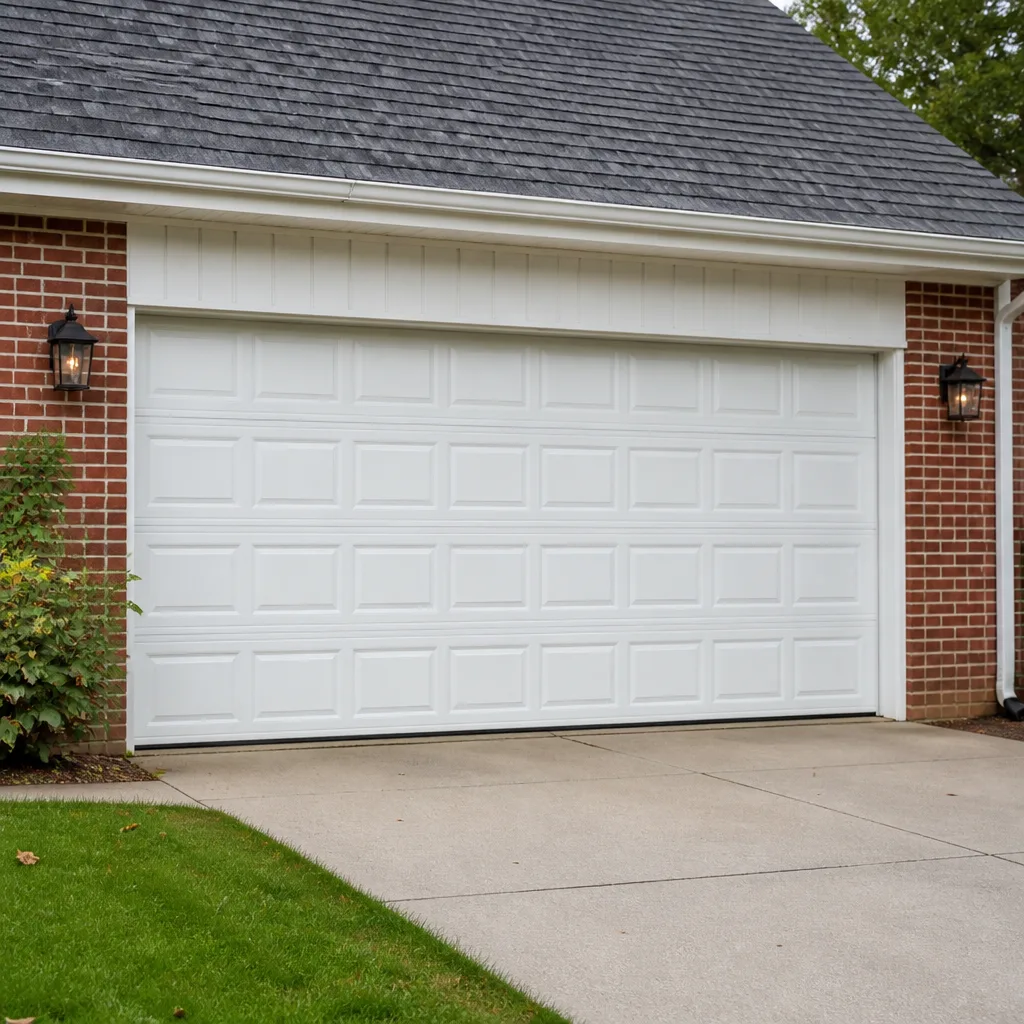 Raised-panel steel
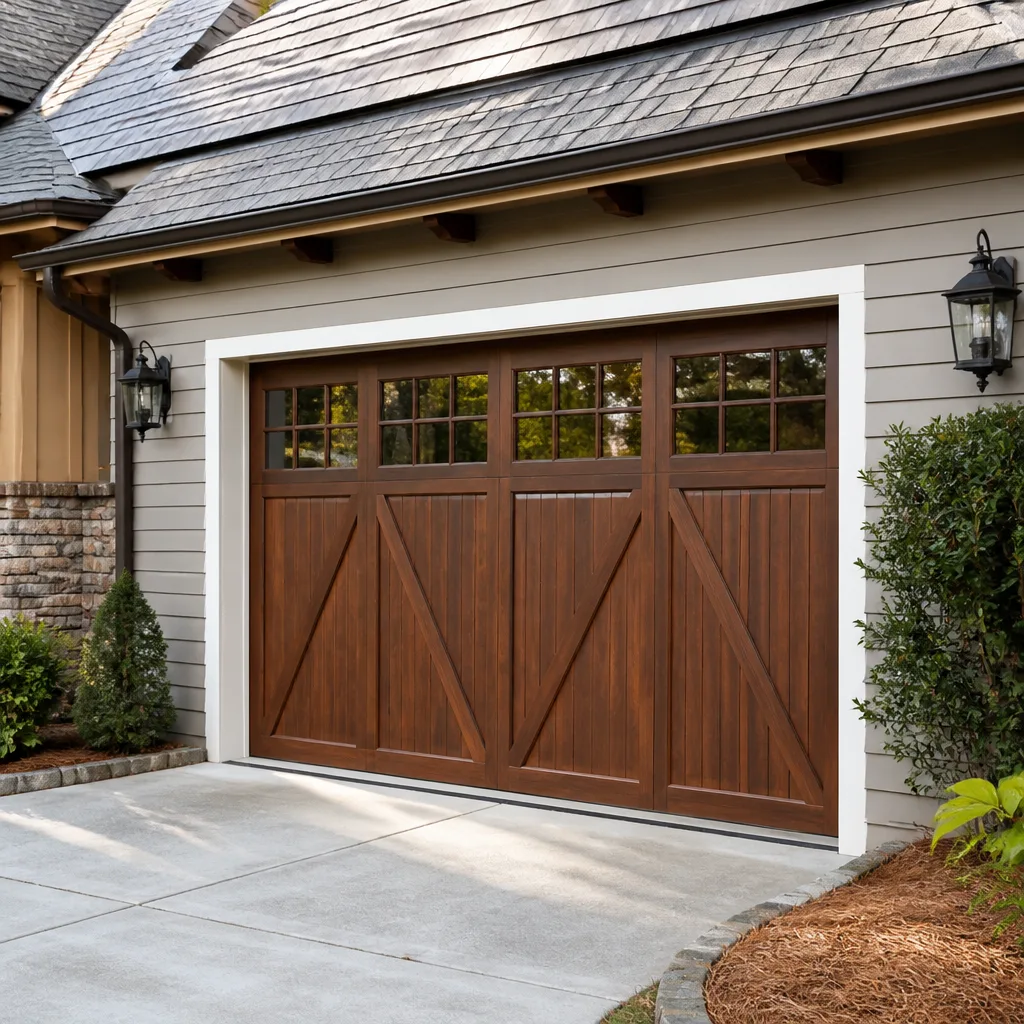 Carriage house
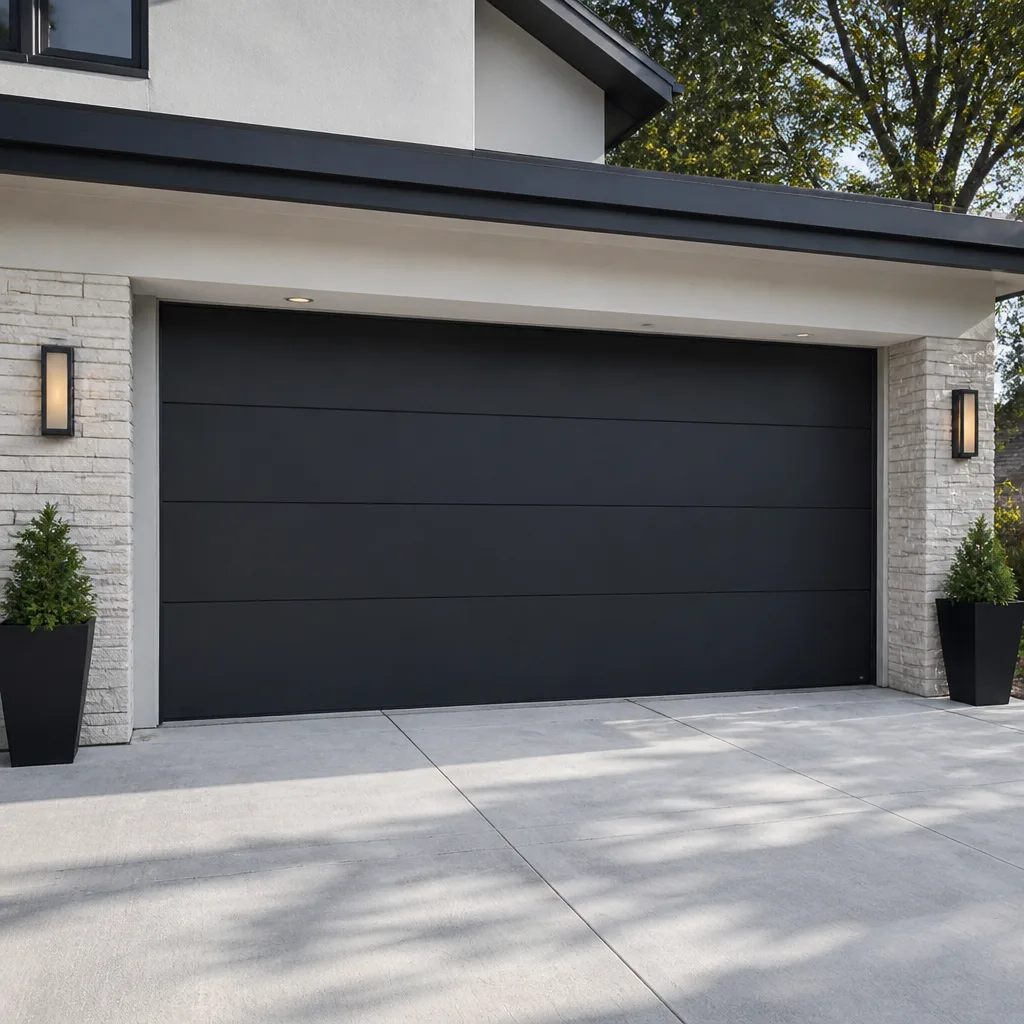 Modern flush
 Full-view glass
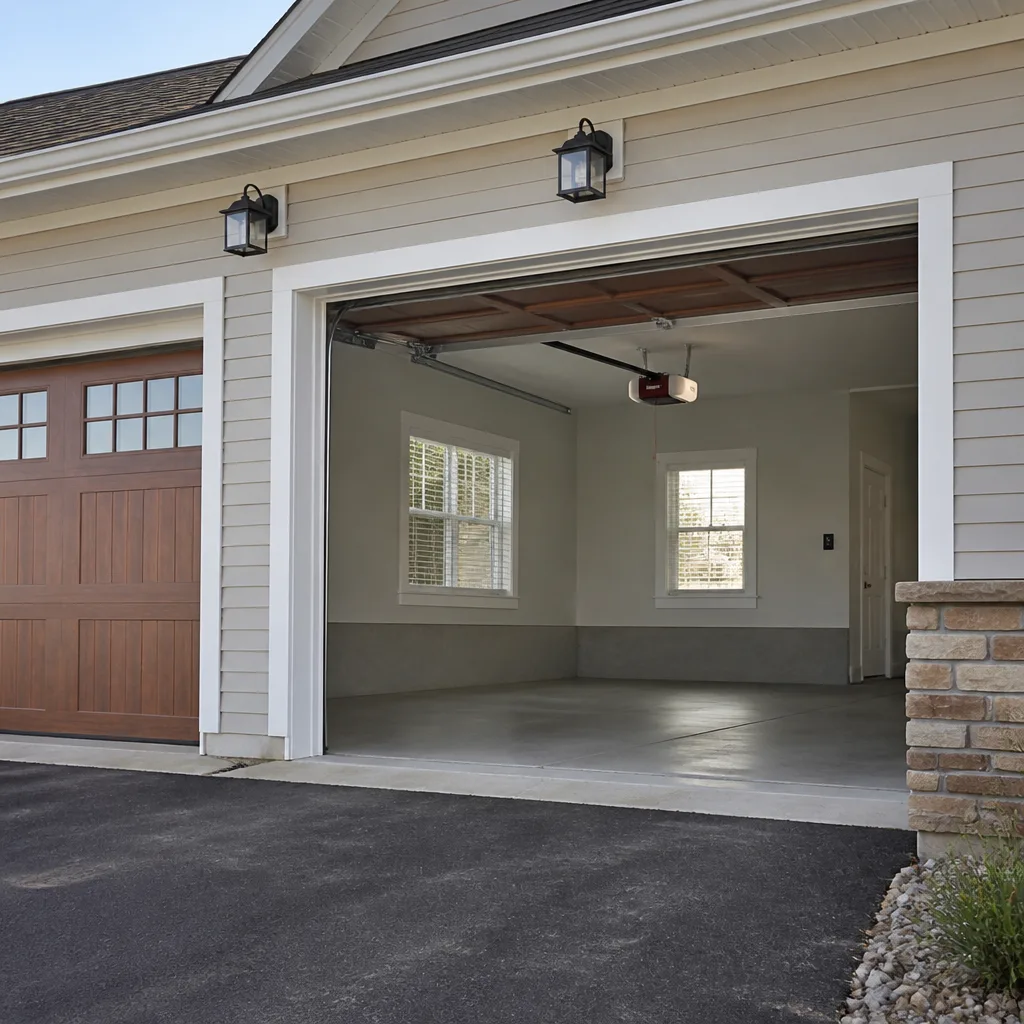 LiftMaster openers
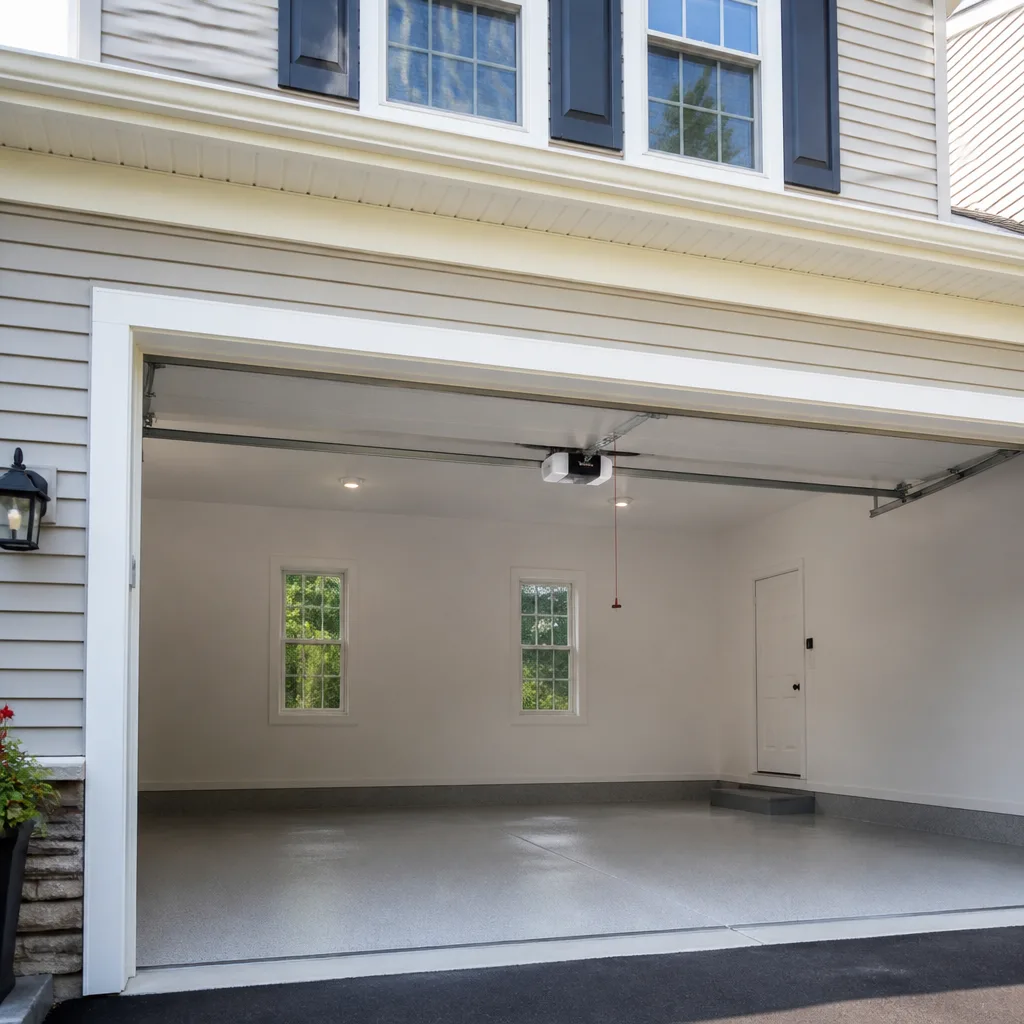 Chamberlain openers
Full 25-point door and opener safety check with every visit - springs, cables, rollers, tracks, and your LiftMaster or Chamberlain opener included
You get a price before we start. It does not change when the pro arrives.
Get your free estimateDIY vs Professional Garage Door: The Everett Homeowner’s Decision Guide
Replacing a bottom weatherseal is a legitimate DIY job that takes about forty minutes. Adjusting torsion spring tension is a legitimate way to end up in an Everett emergency room. The problem is that most online guides treat these as points on the same spectrum rather than categorically different activities, so a homeowner who successfully swapped a roller reads the same confident tone and assumes the spring is the next step up. It isn’t. It’s a different category of work entirely. This guide splits garage door jobs into three honest buckets – safe DIY, cautious DIY, and professional-only – explains the mechanical reason behind each classification, and shows you how to scope a hybrid approach that keeps the easy work in your hands and the dangerous work in trained ones. You’ll finish knowing exactly which bucket each task on your Everett door falls into.
Quick Answer
Most garage door tasks split cleanly into two groups: cosmetic and access work (weatherseals, lubrication, roller swaps, remote pairing, visual inspections) is genuinely safe to do yourself, while anything involving torsion springs, cables, high-voltage opener wiring, or panel replacement under tension belongs to a trained technician. The dividing line isn’t difficulty – it’s stored energy. If a task requires you to release or work against the spring and cable system that holds a door weighing well over a hundred pounds, stop and call a professional. Everything else, you can reasonably handle in an afternoon.
Styles & brands we work with
- Raised-panel steel
- Carriage house
- Modern flush
- Full-view glass
- LiftMaster openers
- Chamberlain openers
Table of Contents
- How Do You Categorize a Garage Door Job?
- Which Garage Door Jobs Are Genuinely Safe to DIY?
- Which Jobs Are Cautious DIY, and What Precautions Matter?
- Which Garage Door Jobs Are Professional-Only, and Why?
- What’s the Real Cost of DIY on Borderline Tasks?
- What Tools and Baseline Knowledge Qualify You for Intermediate Work?
- How Does DIY Garage Door Work Affect Insurance and Resale in Washington?
- How Do You Scope a Hybrid Approach?
How Do You Categorize a Garage Door Job?
The useful way to sort garage door work isn’t by how hard it looks. It’s by how much stored mechanical energy is in play while you touch it. A garage door is one of the few things in a house that holds hundreds of pounds of tension even when it’s sitting still and the opener is unplugged. That tension lives in the springs and cables, and it’s what makes certain jobs categorically different from others.
Sort every task into these three buckets:
- Safe DIY: No interaction with springs, cables, or line voltage. If you get it wrong, the door still fails safely – it just doesn’t work right until you fix it. Weatherseals, lubrication, roller and hinge swaps on a door with the springs already relaxed, remote and keypad pairing, and visual inspection all land here.
- Cautious DIY: You’re near the spring and cable system but not releasing or replacing it, and you understand the specific precautions that keep you safe. Adjusting travel limits and force settings on a modern opener, replacing a wall-mounted push button, and swapping a photo-eye sensor are examples. These are manageable for a careful homeowner who reads the manual.
- Professional-only: Anything that requires releasing tension from the spring and cable system, opening a high-voltage electrical panel, or lifting a door off its track. Torsion and extension spring replacement, cable replacement, panel replacement on a wound door, and new opener installation that involves new wiring all sit here. So does anything where the door is already off track or a cable is already slack.
The mechanical reason matters more than the label. A torsion spring stores energy that has to be released in a controlled sequence using two winding bars and a specific turning pattern. Get it wrong, and the spring can unload in a fraction of a second with enough force to break bone. That risk doesn’t scale down with your skill. It’s present at every skill level. In Everett, where lots of homes have doors mounted on older tracks with decades of seasonal cycling, that risk is compounded by fatigue.
Which Garage Door Jobs Are Genuinely Safe to DIY?
These are the jobs where we’d hand you the tools and wish you well. None of them involve stored spring energy or line voltage, and if you make a mistake, the door still fails safely.
- Bottom weatherseal replacement. The seal degrades with every season of Everett’s wet winters and dry summers. You’re sliding it out of its channel and sliding a new one in. About forty minutes on most doors.
- Lubrication. A garage door has rollers, hinges, and a track that all benefit from a proper garage door lubricant once or twice a year. Avoid WD-40 as a long-term solution; use a lithium or silicone garage door spray.
- Roller and hinge replacement. If the door is fully closed and the springs are intact (not necessarily relaxed – just fully intact and holding), you can usually swap a roller or a hinge without releasing tension. Confirm the door is fully down before you start, and never reach into a hinge near a winding point.
- Remote, keypad, and app pairing. Whether you’re adding a Chamberlain remote or connecting a LiftMaster opener to its app, pairing is a button sequence and nothing more.
- Photo-eye sensor cleaning and alignment. If your door reverses mid-travel, nine times out of ten it’s a dirty or misaligned sensor. Both are safe to adjust.
- Visual inspection. A monthly walk-around looking for frayed cables, worn rollers, or a door that hangs unevenly is the single best thing you can do yourself. It catches problems while they’re still cheap.
One rule for the whole bucket: never force anything. If a part resists or the door moves in a way you don’t expect, stop and get eyes on it. We’ve seen plenty of Everett homeowners turn a five-dollar hinge into a two-hundred-dollar repair by pushing through when something felt off.
Which Jobs Are Cautious DIY, and What Precautions Matter?
A handful of jobs sit near the spring system but don’t require releasing tension, and they’re within reach for a careful homeowner who reads the manual and understands what not to touch. The precautions matter more than the task.
- Read the opener manual for your specific brand first. Travel limits and force settings work slightly differently on Genie and Chamberlain units, and guessing at the adjustment can cause the door to reverse or fail to close.
- Unplug the opener before touching any of its settings or wires. The force and travel adjustment is done with the power off on most units, then reconnected to test. Never work near an energized opener.
- Keep fingers clear of every hinge and track gap while the door is moving. Most finger injuries happen during test runs, not during the adjustment itself.
- Test the auto-reverse safety feature after any change. Place a small object on the floor in the door’s path and confirm the door reverses. If it doesn’t, stop and call a professional.
- Never touch the winding cone at the end of a torsion spring. It’s connected to the spring you’re not releasing. Even a slight turn risks a sudden unload.
Wall-mounted push buttons and photo-eye sensors fall into this bucket too. They involve low-voltage wiring you can safely handle if the breaker to the garage circuit is off and you’ve unplugged the opener. Line-voltage opener installation is a different story entirely – that’s professional-only.
If you’re not confident you can identify the winding cone or the high-voltage side of the opener, that’s your signal to step back a category. There’s no shame in it, and we’d rather see an intact homeowner than an intact door.
Which Garage Door Jobs Are Professional-Only, and Why?
This is where we get direct: certain garage door jobs should never be attempted by a homeowner, regardless of how handy you are or how many videos you’ve watched. Not because you lack skill, but because the mechanical forces don’t care about skill.
- Torsion spring replacement and adjustment. The spring holds the weight of the entire door, which is why it’s the most dangerous single component in any garage door system. It’s wound under hundreds of pounds of tension using two concrete winding bars, and releasing that tension in the wrong sequence can send the spring flying. Ask any Everett emergency room whether they’ve seen a homeowner result from this.
- Extension spring replacement. Less exotic than torsion but no safer. Extension springs store the same energy and have a documented history of exploding when the safety cable fails or is missing.
- Cable replacement. Cables carry the door’s full weight to the drums at each end. A slack or snapped cable can whip with enough force to cut through a hand.
- Panel replacement on a wound door. Lifting even one panel changes the balance of the whole system. Do it wrong and the door can come down or fold the remaining panels.
- New opener installation with new wiring. Running new line-voltage wire to an opener, or to a new circuit breaker, is electrical work that requires a licensed electrician or a technician trained for it.
- Any door that’s already off track or has a slack cable. This is the most dangerous state a door can be in. Don’t touch it. Call a professional and keep everyone and everything out from under the door until it’s fixed.
If any of these tasks describes your situation, the right move is an experienced professional, ideally someone who has worked on your brand before. We’re certified on LiftMaster, Chamberlain, Genie, Clopay, Amarr, Wayne Dalton, Craftsman, and Raynor – so when your door says the brand name on the label, that’s what we work on. That’s garage door spring repair as a dedicated service, not an exception.
What’s the Real Cost of DIY on Borderline Tasks?
Here’s what most DIY guides skip: on borderline tasks, the math often favors hiring a professional once you factor in parts markup and the callback rate. Not always – the safe-DIY bucket is genuinely cheaper to do yourself. But for the cautious and professional-only buckets, the calculation is different from what it looks like from the outside.
Homeowners buy spring and cable parts at retail prices from a hardware store or online, which typically runs noticeably higher than the trade pricing a professional gets on the same part. Then add the tools: two winding bars, a proper set of safety glasses, a door-level gauge. For a one-time job, the tool cost alone can eat the savings.
Then add the callback rate. When technique matters – spring winding, cable tension, track alignment – a homeowner with the right parts but the wrong technique ends up calling in a professional anyway, and the total is now the DIY parts plus the professional price plus the difference between the two. In our experience, that’s the more common outcome on spring and cable work than a clean fix. The parts don’t fail because they’re wrong; they fail because they weren’t wound or seated correctly.
A few rough categories:
- Spring repair and replacement: A one-spring job typically costs $180 to $340 depending on spring type and door weight. A matched pair, which is what we recommend replacing together, usually costs roughly twice that. A DIY attempt that fails and calls in help usually exceeds that range once parts and tools are added.
- Opener repair: Runs from simple remote and sensor fixes to motor and gear replacement, sized to the failure.
- Panel replacement: Sized by panel, color, and whether it’s still manufactured. Clopay and Amarr panels on Everett homes are usually available; discontinued colors sometimes aren’t.
Every estimate is free and the price is set per job by the written estimate. That number is agreed before any work starts, and it doesn’t move after. If the job is bigger than expected, we tell you before we touch the door, not after.
What Tools and Baseline Knowledge Qualify You for Intermediate Work?
If you want to take on cautious-DIY work, you need more than a positive attitude. Here’s a concrete list of what actually qualifies you. If you can’t tick these off honestly, that’s your answer.
Tools:
- A proper set of safety glasses – not sunglasses, not going without.
- Work gloves that fit well enough to keep your hands, not obscure them.
- A sturdy stepladder rated for your weight plus the tools.
- A torque-capable socket set and screwdrivers that match the fasteners on your door and opener.
- A garage door lubricant specified for rollers and hinges.
- A multimeter, if you’re going to test low-voltage wiring on an opener.
Baseline knowledge:
- You can identify the difference between a torsion spring (the horizontal one above the door) and an extension spring (the one that runs alongside the track).
- You know which end of the door is high-voltage and which is low-voltage on your opener.
- You can find your opener’s manual online or in the garage, for your specific model – not a generic YouTube video.
- You know how to shut off power at the breaker to your garage, and you’ve verified it’s off before working near any wiring.
- You know how to test the auto-reverse safety feature and confirm the door reverses on contact with an object.
- You can look at a fully closed door and tell whether it’s balanced (it stays where you put it half-raised) or out of balance (it drifts up or down).
If you’re missing more than one item from these lists, that’s not a skills deficit to overcome – it’s your signal to hire out that task. The right answer for your door depends on the task, not on your identity as a DIY person.
How Does DIY Garage Door Work Affect Insurance and Resale in Washington?
Washington homeowners ask us this more than most people expect, and the honest answer is that it varies enough that we won’t give you a blanket figure or a “you’re covered” promise. What we can say is this: insurance adjusters look at whether work was done by a qualified professional when a claim involves a component that failed after a homeowner worked on it. If a torsion spring you replaced yourself fails and damages the door, panels, or the car underneath, the claim may be reviewed differently than if the same failure happened after professional work.
On the resale side, Washington’s seller disclosure form asks specific questions about known defects and repairs. If you replaced an opener or a spring yourself, you’ll likely need to disclose that work. Some buyers’ lenders and home inspectors flag self-installed openers or springs as a red flag during inspection, which can delay closing or trigger a re-inspection request. Professional work comes with documentation the buyer and their lender can rely on.
The practical rule: cosmetic and access work (seals, rollers, remotes) is not the kind of thing that creates disclosure or insurance exposure. Mechanical core work (springs, cables, opener installation) is. If you’re not sure which category your task falls into, that alone is a good reason to have a professional at least look at it.
If you’d like a free estimate for the work you’re considering, call Everett Garage Door Repair Pros at (866) 593-5155. We answer 24/7. Fast dispatch from 7am to 7pm. We can tell you what’s typically needed for your specific door, whether the work is something you can safely handle, and what a written estimate looks like before you commit.
How Do You Scope a Hybrid Approach?
The hybrid approach is genuinely the best value for most Everett homes: you handle the cosmetic and access work yourself, and you hire out the mechanical core. It’s not a compromise – it’s a cleaner scoping that saves you money and keeps the dangerous work where it belongs.
Here’s how to prepare so a professional quotes only the work you actually need:
- Do the prep yourself. Clear the garage floor, remove anything under or near the door, and make sure the door can open and close fully during the appointment. This saves the technician setup time and lets them focus on the diagnosis.
- Replace the cosmetic parts first. New weatherseal, fresh lubrication, any worn rollers and hinges you’re comfortable swapping. Get the door looking and sounding right before the technician arrives.
- Write down what you’ve already done. A short list – “replaced bottom seal, lubricated rollers, paired a new Chamberlain remote, replaced the two right-side hinges” – tells the technician exactly where to focus and prevents a quote for work you’ve already handled.
- Describe the symptom in plain language. “The door reverses halfway down” or “there’s a snap sound when it starts to lift” is more useful than “it’s broken.” Note whether it happens in cold weather, on the way up or down, and whether it started suddenly.
- Ask specifically about the mechanical core. Springs, cables, opener installation, and panel replacement. If those are all in good shape, you may not need a professional at all – the technician will tell you honestly.
- Get it in writing before the job starts. The estimate is free and the price is agreed before any work begins. If the on-site diagnosis finds a bigger problem than expected, you get a new written number before anything changes.
Tell the technician what you’ve already done and what still isn’t right. A good technician will quote for the gap, not the whole door. We’ve seen plenty of Everett homeowners save meaningful money by getting the cosmetically easy work out of the way first and letting the mechanical core be quoted separately.
Common Mistakes to Avoid
- Releasing torsion spring tension “just to see.” Even a small release can unload suddenly. The winding cone is not adjustable by a homeowner. Ever.
- Buying parts before diagnosis. Replacing a sensor because the door reverses is common and often wrong – the photo eye, the travel limit, or the force setting can all cause the same symptom. Diagnose first, then buy.
- Using WD-40 as a long-term lubricant. It displaces water but doesn’t lubricate hinges and rollers properly. Use a garage-door-specific lithium or silicone spray.
- Trying to straighten a door that’s already off track. This is the single most common way an Everett homeowner turns a track repair into a full door replacement. Keep everyone clear and call a professional.
- Running a new opener on the old wiring without checking it. Old low-voltage wire can fail with a new smart opener, and the symptom looks like an opener problem. Have the wiring checked before assuming the unit is bad.
- Ignoring a door that feels slightly heavier or lighter than usual. That’s a sign the spring is losing tension. Caught early, it’s a spring replacement. Caught late, it’s a spring and a bent door.
- Skipping the auto-reverse test after any adjustment. Any change to travel limits or force settings should end with the safety test. If the door doesn’t reverse on contact, it isn’t fixed yet.
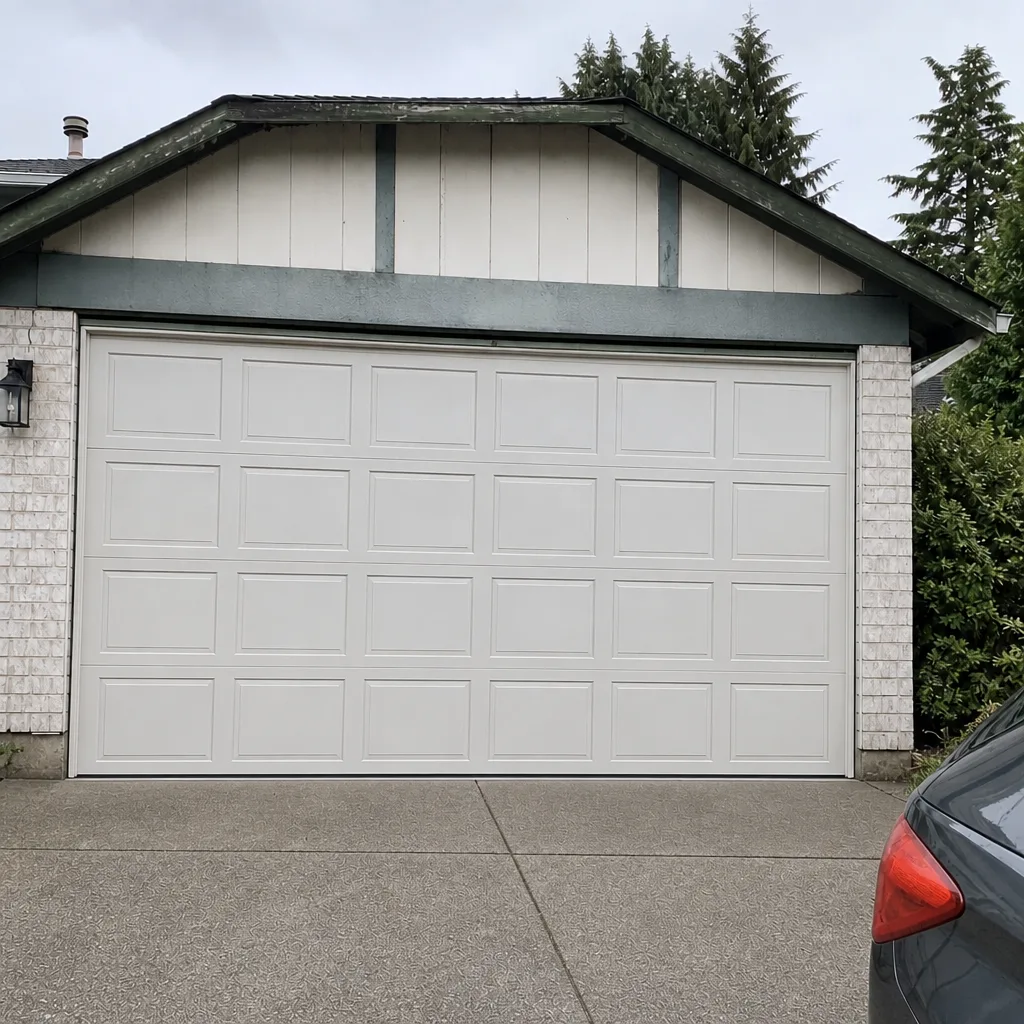
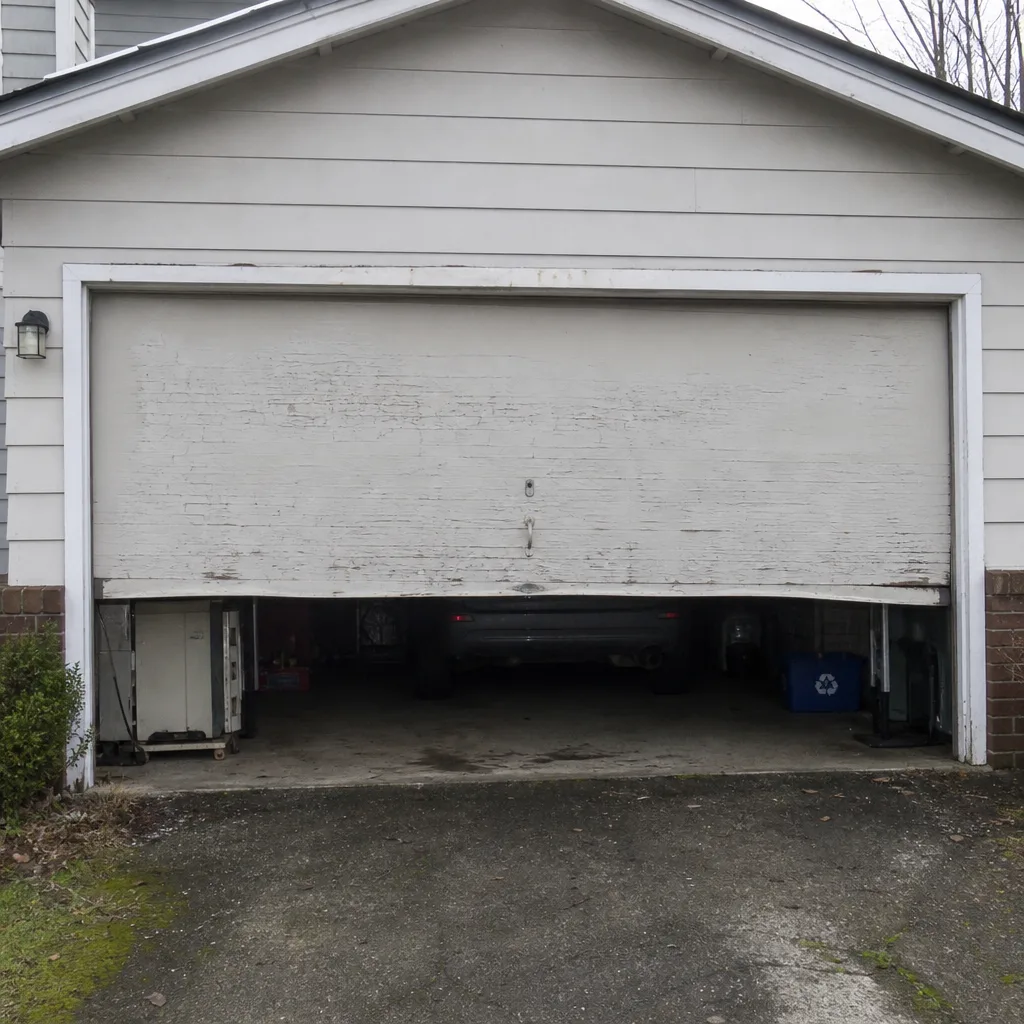
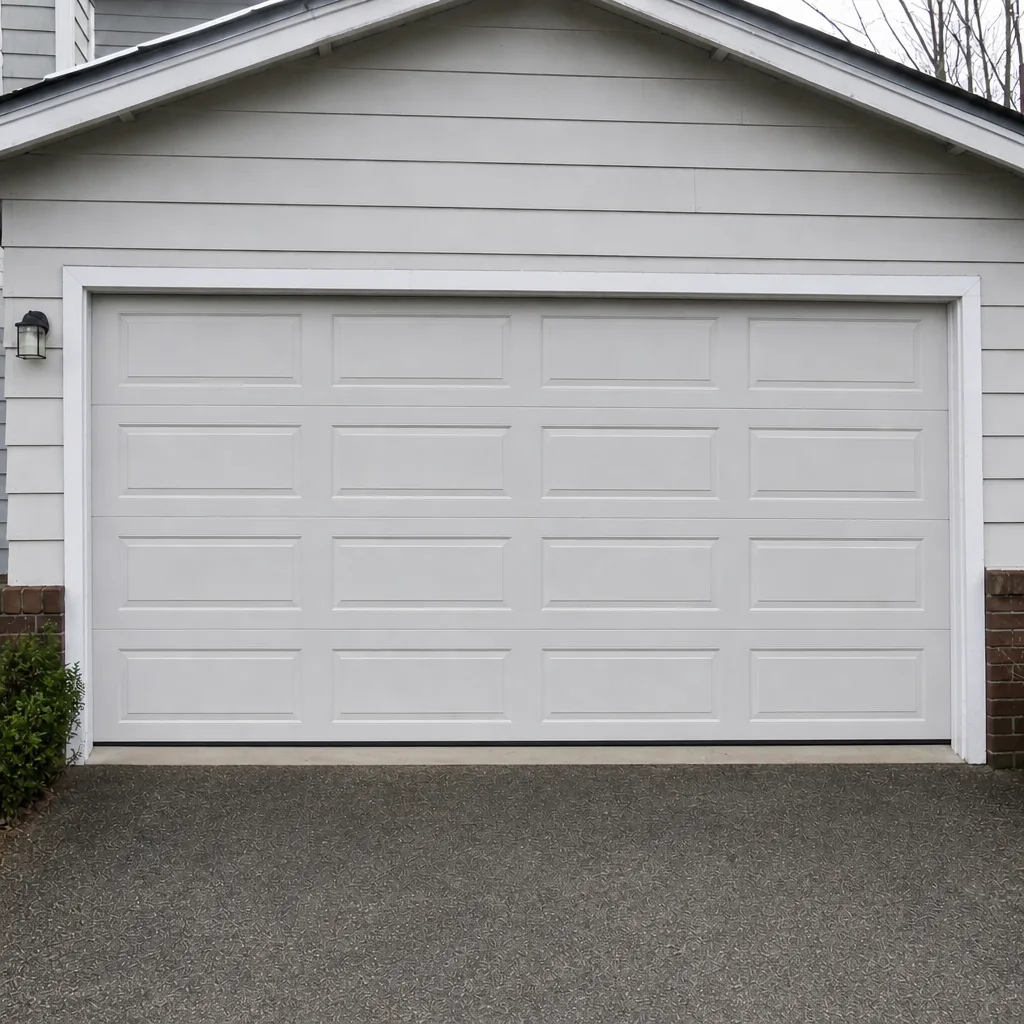
See the difference
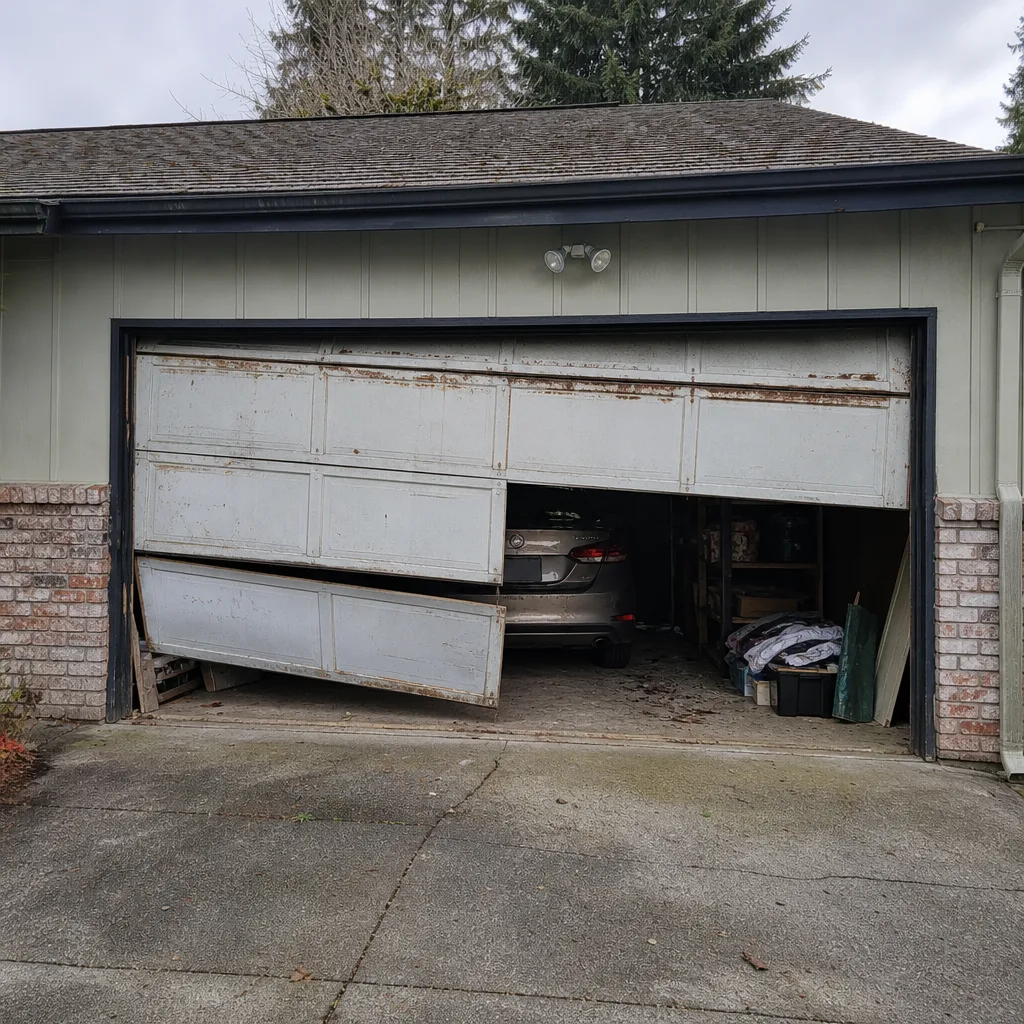 Before
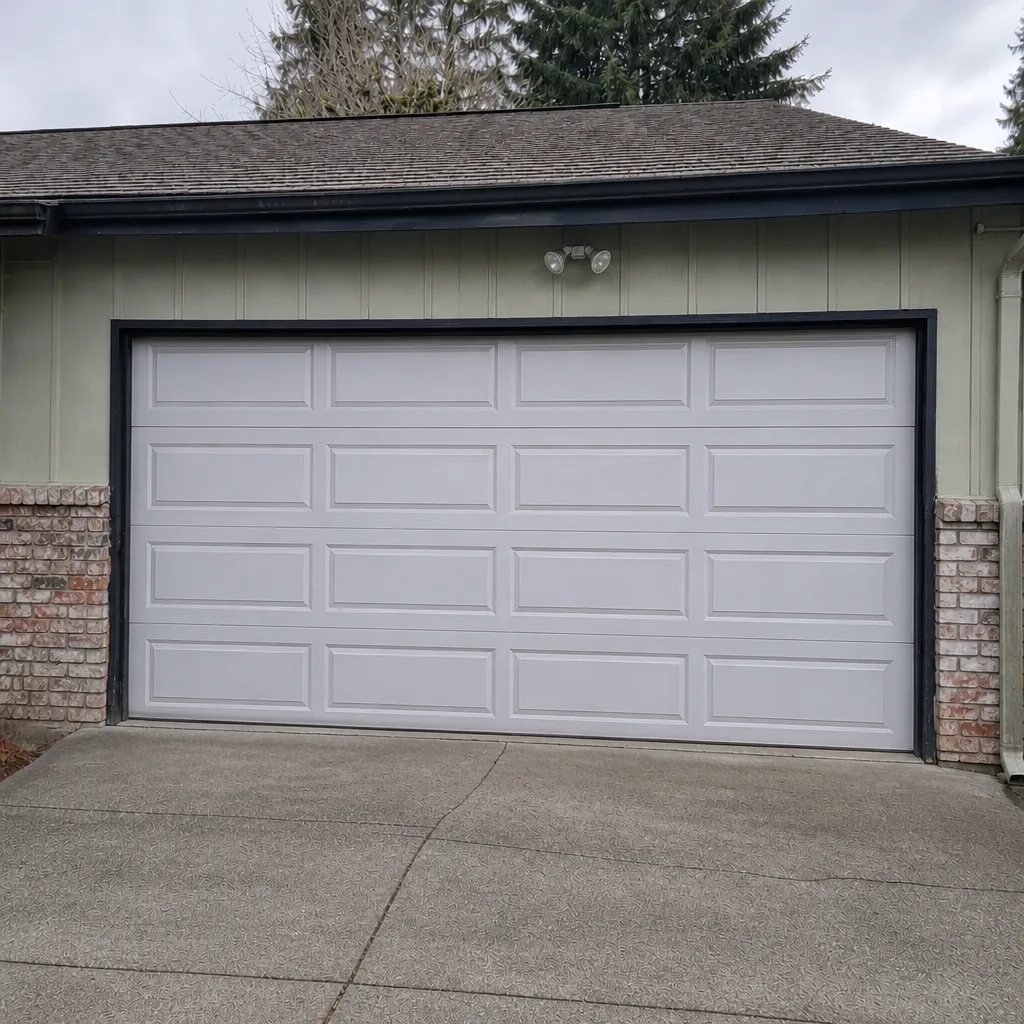 After
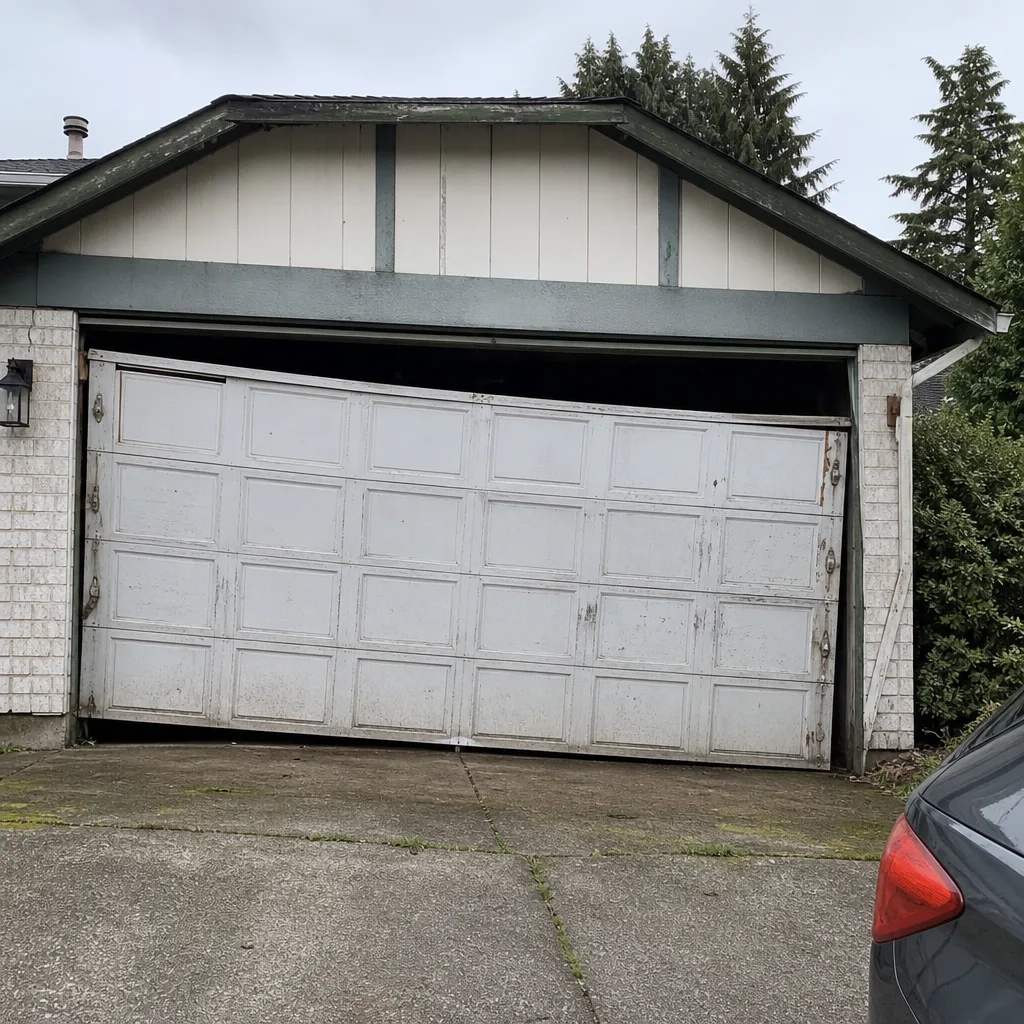 Before
 After
 Before
 After
When to Call a Professional
Call a professional for any of these scenarios: a torsion or extension spring that has visibly broken, a door that won’t open because the spring is under tension but not lifting, any door that has come off its track or has a slack or snapped cable, an opener that needs new wiring or a new installation, a panel that needs replacement on a wound door, and any job you started confidently and then decided against as you got closer to it. Those last ones are more common than homeowners admit, and they’re always the right call. If your door has already failed and the garage is your main entrance, you need the door back in service today – not next week. Everett Garage Door Repair Pros offers free estimates in Everett, handles emergency garage door service for failures that can’t wait, and can work on your brand from the moment we arrive. Call (866) 593-5155. We answer 24/7. A call outside dispatch hours is booked into the next opening, Sunday through Friday, 7am to 7pm.
Frequently Asked Questions
Yes. Torsion and extension spring replacement are professional-only jobs. The spring holds the full weight of the door and stays under hundreds of pounds of tension at rest. Releasing that tension requires two winding bars and a specific sequence, and a mistake can unload the spring with enough force to cause serious injury. Call (866) 593-5155 for a free estimate on spring replacement. The price is set per job by the written estimate, agreed before work begins.
Weatherseal replacement, lubrication, roller and hinge swaps on a fully closed door with intact springs, remote and keypad pairing, photo-eye cleaning, and visual inspections are all safe DIY. They don’t involve releasing spring tension or working near line voltage. Anything involving springs, cables, high-voltage wiring, or a door that’s off track is professional-only.
It depends on your specific policy, and we won’t promise you a blanket answer. In general, insurance claims involving a component a homeowner replaced or adjusted themselves are reviewed differently than claims involving professional work. Check with your insurer before any mechanical work. The safest path is to leave spring and cable work to a trained professional and keep the cosmetic and access work for yourself.
Typical estimates for one spring run $180 to $340 depending on the spring type and door weight. A matched pair, which we usually recommend replacing together because both springs have cycled the same number of times, typically costs about twice that. You can read more about our garage door spring repair service. Call (866) 593-5155 for an exact quote. Estimates are free, and the written estimate sets the final price.
Most smart opener connection issues trace back to a specific step: the app permissions, the Wi-Fi band (2.4GHz is usually required), the hub firmware, or the specific pairing sequence for your brand. If you’ve tried the manual’s sequence twice and it still won’t connect, a technician can usually diagnose it faster than you can keep troubleshooting. We work on LiftMaster and Chamberlain MyQ, Genie Aladdin Connect, and Craftsman smart openers. Call (866) 593-5155 for our garage door opener repair service. Estimates are free.
For same-day repair on a door that’s stuck open, off track, or has a broken spring, call (866) 593-5155. We answer 24/7. Fast dispatch from 7am to 7pm, Sunday through Friday. A call outside dispatch hours is booked into the next opening. For new installations and full replacement, that’s measured and scheduled work, so expect a free measure and a written price instead of same-day service.
The Bottom Line
The DIY-versus-hire decision for a garage door isn’t about whether you’re handy. It’s about which task you’re doing. Cosmetic and access work – weatherseals, lubrication, roller swaps, remotes, sensors, inspections – is genuinely safe and worth doing yourself. Cautious DIY on things like travel limits and force settings is fine for a careful homeowner who reads the manual and understands which end of the opener is high-voltage. Anything that requires releasing or working against the spring and cable system, opening an electrical panel, or lifting a panel off a wound door is professional-only, and that’s not a suggestion. The hybrid approach is the best value for most Everett homes: prep and cosmetic work in your hands, mechanical core in ours. Call Everett Garage Door Repair Pros at (866) 593-5155 for a free estimate. We answer 24/7. Fast dispatch from 7am to 7pm, Sunday through Friday. For planned work we’ll send you a written price after a free measure. Either way, the price is agreed before any work starts.
Written by the team at Everett Garage Door Repair Pros.